
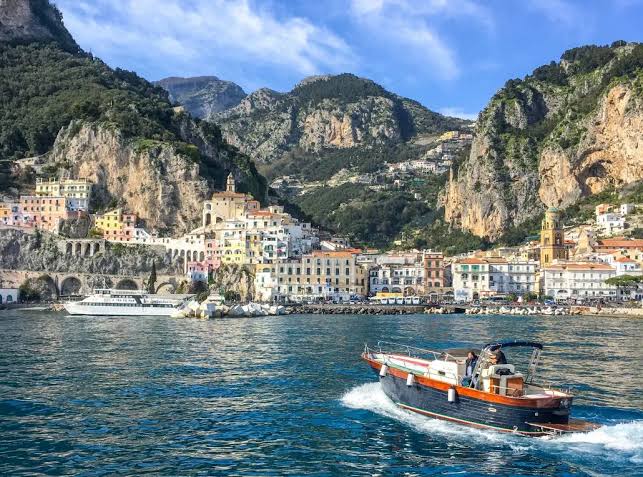
How the ferry network actually works
There is no single company running "the Amalfi Coast ferry." Several independent operators (names like Travelmar, NLG, Alicost and others run seasonal routes [VERIFY]) each cover overlapping stretches of the same coastline, with their own boats, prices and timetables. In practice this means the route you want — say, Positano to Amalfi — might have three or four departures an hour at midday in August, run by different companies, and almost nothing after dinner or outside the season.
The core line runs Sorrento–Positano–Amalfi–Salerno, with some services calling at Praiano, Minori and Maiori depending on the day and operator. A separate, usually pricier, line connects Capri to Positano, Amalfi and Sorrento, aimed at day-trippers rather than commuters. Naples connects mainly to Sorrento and Capri directly, and only occasionally to the coastal villages themselves — check the specific route before assuming Naples links straight to Amalfi.
Ticket comparison: kiosk, app, or through a tour
| Method | Best for | Trade-off |
|---|---|---|
| Pier ticket kiosk | Same-day travel, flexible plans | Queues in high season; cash and card usually accepted; no guaranteed seat |
| Operator website or app | Fixed dates booked ahead | Confirmed departure, but each company sells only its own routes |
| Comparison/booking platforms | Comparing operators at once | Convenience fee; still subject to the same weather cancellations |
| Boat tour with transfer included | Sightseeing plus point-to-point travel | Priced as an experience, not a commute; fixed group schedule |
| Private boat transfer | Groups, luggage, fixed timing | Highest cost, but door-to-door and immune to public timetables |
We don't sell ferry tickets ourselves — for public ferries, buy directly from the kiosk at your departure pier or the operator's own site or app. What we do link to are bookable boat tours and transfers: useful if you want a scheduled, pre-paid seat with a guide or driver, rather than queuing at a pier and hoping the next sailing has room.
Timing, seasons and cancellations
- July and August have the densest timetables — often hourly or better on Sorrento–Positano–Amalfi in daylight hours.
- Shoulder months (April, May, October) run a thinner schedule with real gaps in the afternoon; check the specific date, not a general rule.
- Ferries stop for the day well before dinner most of the season, often mid-to-late afternoon on the last useful run back to a base town [VERIFY].
- Rough seas cancel ferries far more often than they cancel buses. A forecast with a fresh westerly or southerly wind is the main risk sign.
- Cancellations are usually announced the same morning or a few hours ahead, not days in advance, so build in a backup plan rather than relying on a single sailing.
- Public holidays and market days in small towns can shift a kiosk's opening hours — arrive with time to spare rather than right at the posted departure.
If your day depends on being somewhere at a fixed time — a hotel checkout, a flight, a booked lunch — do not plan around the last ferry of the day. Build a bus or taxi option into the plan, especially outside July and August.
What locals actually do
- 1Buy the outbound ticket onlyDon't buy a round trip if your return time is uncertain. Kiosks sell one-way tickets for the next few departures; buying flexible one-ways costs little more and avoids being locked to a swell-cancelled sailing.
- 2Check both the ferry and the bus before committingSITA buses run the same coast road year-round and are unaffected by sea conditions, though they're slower and subject to traffic, especially midday in summer. Locals often check both options and pick whichever leaves soonest.
- 3Arrive 20–30 minutes early in July and AugustBoats fill from the pier queue, not by reservation, on most walk-up routes. Being early is the difference between a seat and standing room, or being turned away on the fullest departures.
- 4Treat a boat tour as the better option when sightseeing mattersIf you want to see the coast from the water rather than simply get from A to B, a boat tour with stops and commentary covers similar ground at a similar or lower total cost than piecing together several ferry legs.
How to save money and hassle
- Compare the ferry price to the SITA bus for the same route before buying — buses are consistently cheaper, if slower [VERIFY].
- Book a single well-timed boat tour that includes coastal legs instead of buying three or four separate ferry tickets for a full-day itinerary.
- Avoid changing plans mid-route in peak season; kiosk queues for popular midday departures can cost you 20–30 minutes you didn't budget for.
- Ask your hotel which routes and times are actually running that week — schedules shift with demand and posted timetables can lag reality.
- If travelling with a group of four or more and heavy luggage, a private transfer boat can work out close to shared-ferry pricing while removing queueing and luggage stress entirely.
- Travel early morning or late afternoon where the timetable allows — the same route can be near-empty an hour outside the midday peak.
Ferry vs bus vs boat tour: which to choose
| Option | Speed | Reliability | Best for |
|---|---|---|---|
| Public ferry | Fast, direct point-to-point | Cancels in rough seas; seasonal only | Quick hops in good weather, April–October |
| SITA bus | Slower, subject to road traffic | Runs year-round in almost all weather | Off-season travel and fixed schedules |
| Scheduled boat tour | Similar to ferry, plus stops | Runs unless seas are genuinely rough | Sightseeing combined with transport |
| Private boat transfer | Fast, flexible timing | Highest reliability if seas allow at all | Groups, luggage, fixed appointments |
| Taxi/private car | Depends on traffic | Runs regardless of sea state | Backup when ferries are cancelled |
Luggage is the detail most visitors miss: ferries generally allow one standard bag per passenger without extra charge, but large suitcases, surfboards or bulky sports gear can incur a supplement or be refused on smaller boats at busy times [VERIFY]. If you're moving between hotels with full luggage, either check the operator's specific policy in advance or consider a private transfer, which has no such restriction.
Frequently asked questions
Do Amalfi Coast ferries run all year?
No. Most routes operate roughly April to October, with the fullest timetable from June to September. Outside that window, expect very limited or no service on most lines [VERIFY] — use SITA buses instead.
Can I buy ferry tickets online in advance?
Yes, most operators sell online through their own site or app, and some routes are also listed on comparison platforms. This site does not sell ferry tickets directly; for public ferries, book with the operator or buy at the pier kiosk.
What happens if my ferry is cancelled for bad weather?
Operators typically refund or rebook you onto the next available sailing, but on a rough day that might mean no sailing at all until conditions improve. Keep a bus or taxi as backup rather than relying on a single ferry.
Is it faster to take the ferry or the bus between Positano and Amalfi?
The ferry is faster in good conditions, roughly 30–40 minutes versus up to an hour or more by road in summer traffic [VERIFY]. The bus runs regardless of sea state, which matters more than raw speed on an uncertain-weather day.
How much luggage can I bring on a ferry?
Most operators allow one normal bag per passenger free of charge; large suitcases or bulky items may cost extra or be turned away when boats are full [VERIFY]. Check the specific operator's policy if travelling with heavy luggage.
Does this site sell ferry tickets?
No. We are not a ferry operator and do not sell ferry tickets. We link out to bookable boat tours and transfers, which are a different product — a scheduled, guided or private experience rather than a scheduled public commute.
Is a boat tour a good substitute for a ferry?
For sightseeing, often yes — a boat tour covers similar coastline with commentary and stops, at a comparable or lower total cost than several separate ferry legs. For a simple, fast point-to-point trip with no sightseeing agenda, a public ferry or bus is usually more direct.
Do ferries connect Naples directly to Positano or Amalfi?
Naples connects mainly to Sorrento and Capri; direct services to the coastal villages themselves are limited and seasonal [VERIFY]. Most visitors coming from Naples change at Sorrento onto a coastal route.
Last reviewed: 2026-08-03 · We link to GetYourGuide. If you book through our links we may earn a commission at no extra cost to you.