
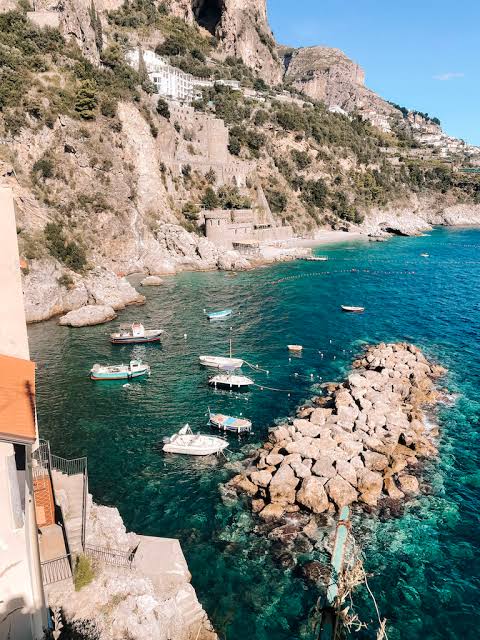
Where the water is actually worth getting into
Four areas stand out, and only one of them is reachable on foot. Punta Campanella, at the western tip of the peninsula, is a marine protected area where fishing limits have left visible fish life and seagrass meadows. The Bay of Ieranto next to it is the shore-accessible exception — a 40-minute walk down from Nerano — and it is the best snorkelling in the region for anyone without a boat.
West of Positano, the Li Galli islets sit in deep clear water with steep walls dropping away fast; boats anchor on the sheltered side and you swim over rock rather than sand. Around Conca dei Marini and the Furore fjord you get sea caves, arches and cold freshwater seeps that make the water shimmer and, briefly, feel ten degrees colder.
Ticket comparison: which tours give you real water time
| Format | Duration | Swim stops | Indicative price |
|---|---|---|---|
| Shared coastal tour | 3–4 h | 1 stop, 20–30 min | €50–€85 pp |
| Shared full-day tour | 6–8 h | 2 stops, 30–45 min each | €90–€160 pp |
| Dedicated snorkelling trip | 3–4 h | 2–3 stops, gear and guide in water | €70–€120 pp |
| Ieranto / Punta Campanella tour | 4–5 h | Reserve stops, best fish life | €80–€140 pp |
| Private gozzo | 4–6 h | As many as you want | €500–€1,100 per boat |
| RIB / speedboat small group | 4 h | 2 stops, reaches distant coves | €90–€150 pp |
Read the itinerary, not the headline. A large motor cruiser marketed with snorkelling photos may give you a single 20-minute stop with 60 people on one ladder. A 12-person gozzo at a similar price gives two stops and a skipper who moves if the cove is busy. Group size is the single strongest predictor of how much time you spend in the water.
There is no coral reef here and no tropical fish. What you get is Mediterranean rock life — wrasse, bream, damselfish, octopus, urchins, sometimes a moray in a crevice — plus dramatic underwater topography. Set expectations accordingly and you will not be disappointed.
Timing is everything
- Water temperature lags air temperature by about six weeks: September water is warmer than June water even though the air is cooler [VERIFY].
- Morning departures have flatter water and better visibility. Afternoon chop stirs sediment near cliffs and cuts clarity noticeably.
- Avoid the day after a storm. Two calm days are usually enough to restore visibility.
- The 12:00–15:00 window is when every boat crowds the same coves; ask for the first or last stop of the day instead.
- May and early June give the clearest water of the year, at 18–20 °C — bring a rash vest or a shorty if you feel the cold.
- August has the warmest water and the most anchored boats. Trade a degree or two for space by going in late September.
Insider entry: getting more out of each stop
- 1Bring your own maskLoaner masks are the main reason people cut a stop short. A €25 mask that seals on your face changes the whole experience; fins matter far less.
- 2Enter first, exit lastOn a shared boat, the ladder queues at both ends of the stop. Being in the water within a minute of the engine stopping can double your actual swim time.
- 3Swim towards the rock, not the open waterLife concentrates in the first five metres of depth along the wall, in the shadow line under overhangs. The blue in the middle of the cove is empty.
- 4Ask the skipper where the freshwater seeps areAround Conca dei Marini and Furore, cold springs enter at the base of the cliffs. The shimmer where they mix is the most interesting thing to look at on this coast.
- 5Book Ieranto separately if you have no boatThe Nerano trailhead gives you the reserve on foot. Take water and shoes — it is a proper 40-minute descent and the same back up.
How to save
- Walk into Ieranto from Nerano: the best snorkelling in the area costs a bus ticket and a small reserve fee [VERIFY].
- Buy a mask and snorkel at a supermarket or dive shop rather than paying rental fees on multiple tours.
- Choose a 3–4 hour trip with two stops over a full-day tour with two stops — the extra hours are transit, not swimming.
- Split a private gozzo among six for unlimited stops at roughly shared-tour prices per head.
- Travel in late September: warmest water of the year against the calendar, lowest prices after peak, fewer boats per cove.
- Bring your own towel, water and reef-safe sunscreen; on-board sales are priced for captives.
How to reach the best snorkelling ports
| Area | Departure port | How to get to the port |
|---|---|---|
| Punta Campanella / Ieranto | Marina del Cantone, Nerano | Bus or taxi from Sorrento, 40–50 min |
| Li Galli / Positano coves | Positano Spiaggia Grande | SITA bus or seasonal ferry |
| Furore, Conca dei Marini | Amalfi harbour | Ferry from Salerno or SITA bus |
| Capri's Grottos | Sorrento or Positano | Train to Sorrento, then port walk |
| Cetara, Erchie (quiet) | Salerno or Cetara | High-speed train to Salerno, then bus |
If snorkelling is the main reason for your trip, base yourself in Sorrento or Nerano rather than Amalfi. The protected water is at the western end of the peninsula, and staying nearer to it saves an hour of boat transit each way.
Frequently asked questions
Where is the best snorkelling on the Amalfi Coast?
The Bay of Ieranto and the Punta Campanella marine protected area, both at the western tip of the Sorrentine Peninsula, have the clearest water and the most visible fish life. Li Galli and the coves around Conca dei Marini come next.
Do boat tours include snorkelling gear?
Most include masks and often fins, but sizes and seal quality vary. Bringing your own mask is the single cheapest upgrade to the experience.
How warm is the sea, and when?
Roughly 18 °C in May, low-to-mid 20s in July, around 26 °C in August, and still comfortable through September and early October [VERIFY]. Water stays warmer than air well into autumn.
Can I snorkel from the shore instead of a boat?
Yes at Ieranto, reachable on foot from Nerano, and modestly at some pebble beaches. Most of the good drop-offs on this coast have no shore access, which is why boat stops dominate.
Is snorkelling safe for children here?
In sheltered coves on calm mornings, yes, with a life vest and an adult in the water. Avoid afternoon swell against rock walls, where the surge near cliffs is stronger than it looks.
Will I see anything interesting, or is the Mediterranean empty?
Inside the protected areas fish density is genuinely good — wrasse, bream, octopus, urchins and seagrass meadows. Outside them expect fewer fish but excellent rock formations, caves and light.
Do I need a permit for the marine reserve?
Not as a swimmer on a licensed tour — the operator carries the necessary authorisation. Independent boaters face anchoring and access rules that change by zone, so check current regulations [VERIFY].
Last reviewed: 2026-08-03 · We link to GetYourGuide. If you book through our links we may earn a commission at no extra cost to you.